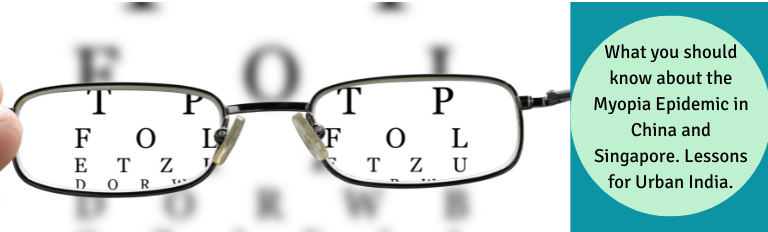
The global landscape of ocular health is currently shifting in a way that is both unprecedented and deeply concerning. For decades, nearsightedness, or myopia, was viewed primarily as a minor refractive inconvenience, a simple biological quirk that could be easily neutralized with a pair of spectacles or contact lenses. However, as we move further into the twenty-first century, it has become abundantly clear that myopia is no longer just a common condition; it has evolved into a full-scale public health crisis. Nowhere is this more evident than in East and Southeast Asia, specifically within the urban centers of China and Singapore. In these regions, the rates of myopia among school-leavers have skyrocketed to staggering levels, often exceeding 80% to 90% in some metropolitan areas. This is not merely a localized phenomenon or a result of genetic predisposition alone. Instead, it is a stark reflection of how rapid urbanization, intense academic pressure, and a dramatic reduction in outdoor physical activity have fundamentally altered the development of the human eye. The lessons we are learning from the “Myopia Capital of the World” serve as a vital warning for other developing urban hubs. As modern lifestyles in major Indian cities increasingly mirror those of East Asia, with high screen time and competitive educational environments, the need for proactive intervention has never been more urgent. Recognizing these global trends is the first step in safeguarding the next generation from the risks of high myopia. For parents who are noticing their children squinting at the whiteboard or moving closer to the television, seeking comprehensive Myopia Control in Mumbai is no longer just an option; it is a clinical necessity to prevent permanent visual complications.
The Anatomy of an Epidemic: Why China and Singapore?
To understand the crises in China and Singapore, we must examine the environmental and societal factors that have created a “perfect storm” of nearsightedness. Myopia occurs when the eyeball grows slightly too long from front to back. This elongation causes light to focus in front of the retina rather than directly on it, leading to blurred distance vision.
In Singapore, the prevalence of myopia is among the highest in the world, earning the nation a sobering reputation in the ophthalmic community. Similarly, in China, the government has officially recognized the myopia crisis as a threat to national health and even military readiness. The primary drivers are clear:
- Educational Intensity: From a very young age, children in these regions spend many hours engaged in “near work” reading, writing, and studying, which places a continuous accommodative strain on the developing eye.
- The Indoor Lifestyle: The rise of high-rise living and digital entertainment means children spend significantly less time in natural sunlight. Sunlight triggers the release of dopamine in the retina, which is believed to play a crucial role in regulating the growth of the eyeball.
- Digital Saturation: The ubiquitous use of smartphones and tablets has moved the “working distance” even closer to the eye, further encouraging the axial elongation of the globe.
The Hidden Dangers of High Myopia
The true concern for specialists is not just the need for thicker glasses. When myopia progresses rapidly in childhood, it can reach a level known as “High Myopia.” This condition involves significant stretching of the ocular tissues, which increases the lifetime risk of several serious eye diseases:
- Retinal Detachment: The inner lining of the eye becomes thin and prone to tearing.
- Myopic Macular Degeneration: Damage to the central part of the vision that cannot be corrected with lenses.
- Glaucoma: Increased pressure that damages the optic nerve.
- Early-Onset Cataracts: Clouding of the lens occurs much earlier than the typical aging process.
A Legacy of Clinical Excellence: Dr. Vinay Agrawal
Navigating these complex ocular trends requires a specialist who possesses both deep clinical experience and an understanding of global health shifts. Dr. Vinay Agrawal (M.B.B.S., M.S. in Ophthalmology, D.N.B. in Ophthalmology, and a Cornea Fellow from the esteemed L.V. Prasad Eye Institute) has been recognized as one of the most highly commended ophthalmologists in the city for the past 30 years and counting. Throughout his three decades of dedicated ophthalmic practice, he has gained extensive experience in cataract, cornea, and refractive surgery, and these remain his primary areas of specialty.
At Clear Vision Eye Centre, this unparalleled experience is combined with a forward-thinking approach to pediatric eye care. We do not just prescribe glasses; we analyze the root causes of vision changes. By leveraging Dr. Vinay Agrawal’s decades of surgical and clinical wisdom, our facility provides a comprehensive shield for young eyes, ensuring that their visual development is monitored with the highest degree of precision and care.
Strategies for Management and Prevention
The goal of modern myopia therapy is to slow down the rate of eye growth. While we cannot “cure” myopia once the eye has elongated, we can significantly reduce the final “minus” power a child reaches. This is achieved through a multi-faceted approach:
1. Environmental Modification
We advocate for the “20-20-20 rule” and a minimum of two hours of outdoor time daily. Natural light remains one of the most powerful and accessible tools in our preventive arsenal.
2. Specialized Optical Solutions
Traditional glasses only help a child see clearly, but they don’t necessarily stop the eye from growing. Modern Myopia Management in Mumbai now includes specialized “defocus” lenses and peripheral defocus contact lenses that signal the eye to slow its growth.
3. Medical Intervention
Low-dose atropine eye drops have emerged as a revolutionary treatment. When used under strict supervision, these drops can significantly reduce the progression of myopia in children with minimal side effects.
4. Comprehensive Screening
The earlier we intervene, the better the long-term result. A thorough Myopia Assessment in Mumbai involves measuring the “axial length” of the eye, not just the prescription power, to get a true picture of the eye’s growth profile.
Why Early Intervention is the Key to Success
Every millimeter of growth in the eyeball represents a significant increase in prescription power and a corresponding increase in the risk of future pathology. For a child whose vision is changing every six months, a standard eye exam is often insufficient. What is required is a dedicated Myopia Consultation in Mumbai where parents can understand the “why” behind the changes and the “how” behind the latest control strategies.
Once a treatment plan is initiated, consistency is paramount. Regular Myopia Follow-up in Mumbai allows the specialist to track axial length and adjust treatment, whether it be drops, specialized lenses, or lifestyle changes, to ensure the best possible protective outcome for the child.
The global surge in nearsightedness is a call to action for every parent and educator. By understanding the factors that have led to the crisis in Singapore and China, we can implement the necessary changes here at home. Protecting a child’s sight is a lifelong investment that begins with awareness and professional guidance. At Clear Vision Eye Centre, we are dedicated to ensuring that the children of our city do not fall victim to this silent epidemic. By staying informed and seeking specialized Myopia Control in Mumbai, you are providing your child with the best possible chance for a lifetime of healthy, clear, and stable vision.
Protect Your Child’s Visual Future
Don’t wait for your child’s prescription to become “high” before taking action. The lessons from China and Singapore have taught us that myopia is an active process that requires an active defense. At our center, we combine thirty years of mastery with the latest global protocols to protect the eyes of the next generation.
- Advanced Diagnostics: We use high-precision tools to track eye growth, not just vision.
- Customized Plans: Every child receives a treatment strategy tailored to their lifestyle and risk factors.
- Proven Results: Benefit from the wisdom of a team that has been leading ophthalmic care for three decades.
- Act Now: Call +91-8356817556 today to schedule an evaluation at Clear Vision Eye Centre and take the first step in stopping the progression of nearsightedness.
Frequently Asked Questions (FAQs)
1. Can my child's myopia be reversed?
Currently, there is no way to shorten an eyeball once it has elongated. Treatment focuses on slowing or stopping further growth to prevent the eye from reaching dangerous levels of high myopia.
2. At what age should myopia control start?
Ideally, as soon as myopia is detected, the eyes grow most rapidly during early childhood and the pre-teen years, making this the “golden window” for intervention.
3. Are low-dose atropine drops safe for long-term use?
Yes, several long-term global studies have shown that low-concentration atropine is safe and effective in children, with very few reporting side effects such as light sensitivity or blurred near vision.
4. Does screen time cause myopia?
While screen time itself is a factor, the combination of prolonged “near work” and a lack of outdoor time contributes most significantly to the epidemic.