Keratoconus Follow-Up Care: How Often You Need Checkups and Why They Matter for Clear Vision
Keratoconus is a progressive eye disorder which alters the shape of the cornea, the clear front part of the eye that is responsible for proper focusing. Rather than keeping its usual round shape, the cornea becomes gradually thinner and acquires a cone-shaped bulge. This alteration can have an impact on vision, causing things to appear blurred, distorted or unclear.
A major aspect of managing Keratoconus is having regular follow-up appointments. Although many patients think that they no longer need frequent eye checks once their vision has improved with the use of glasses, contact lenses, or treatment, Keratoconus can still change quietly, even if the symptoms appear to be stable.
For patients seeking Keratoconus Treatment in Mumbai, regular monitoring is crucial for detecting early progression and selecting the right treatment approach at the right time. Timely checkups help doctors understand how the cornea is changing and protect long-term vision health.
Quick Answer: How Often Should Keratoconus Patients Have Checkups?

Patient Condition | Recommended Follow-Up Frequency |
Early Keratoconus | Every 6–12 months or as advised by the eye specialist |
Progressive Keratoconus | More frequent monitoring based on corneal changes |
Patients undergoing treatment | Follow-up schedule depends on the procedure and healing |
Stable Keratoconus | Regular yearly examinations to track changes |
The exact frequency of checkups depends on several factors, including age, disease progression, corneal thickness, vision changes, and previous treatments.
Why Regular Follow-Up Care Matters in Keratoconus
Keratoconus does not always progress at the same speed in every person. Some individuals experience slow changes over many years, while others may notice faster progression, especially during younger ages. Regular examinations allow specialists to compare previous test results and identify even small changes in corneal shape.
Early detection is valuable because treatment options are generally more effective when the condition is identified before significant corneal weakening occurs. Without proper monitoring, progressive Keratoconus may lead to increased dependence on specialized lenses or more advanced procedures.
A consistent follow-up plan helps patients:
- Track changes in corneal shape and thickness
- Detecting disease progression early.
- Adjust vision correction methods when needed.
- Prevent avoidable complications
- Maintain better quality of vision.
Understanding Keratoconus Progression

The condition usually develops gradually. Patients may notice frequent changes in their glasses prescription or increasing difficulty with night vision. Understanding the Stages of Keratoconus helps doctors determine how advanced the condition is and which management approach may be suitable.
Stage | Common Characteristics |
Early Stage | Minor corneal changes with mild vision problems |
Moderate Stage | Noticeable corneal thinning and increasing visual distortion |
Advanced Stage | Significant corneal irregularity affecting daily activities |
Severe Stage | Greater vision impairment requiring specialised treatment options |
Regular follow-up appointments help identify whether the condition remains stable or requires additional intervention.
How Often Do You Need Keratoconus Eye Checkups?
There is no single follow-up schedule that works for every patient. Eye specialists create personalized plans based on individual risk factors.
Younger patients often require closer monitoring because Keratoconus can progress more actively during teenage years and early adulthood. Patients who have recently experienced vision changes may also need more frequent examinations.
During routine visits, doctors usually compare current findings with previous results rather than relying only on vision testing. This comparison helps identify subtle changes before they become noticeable in everyday life.
A typical follow-up appointment may include:
Eye Examination | Purpose |
Visual acuity test | Measures changes in vision clarity |
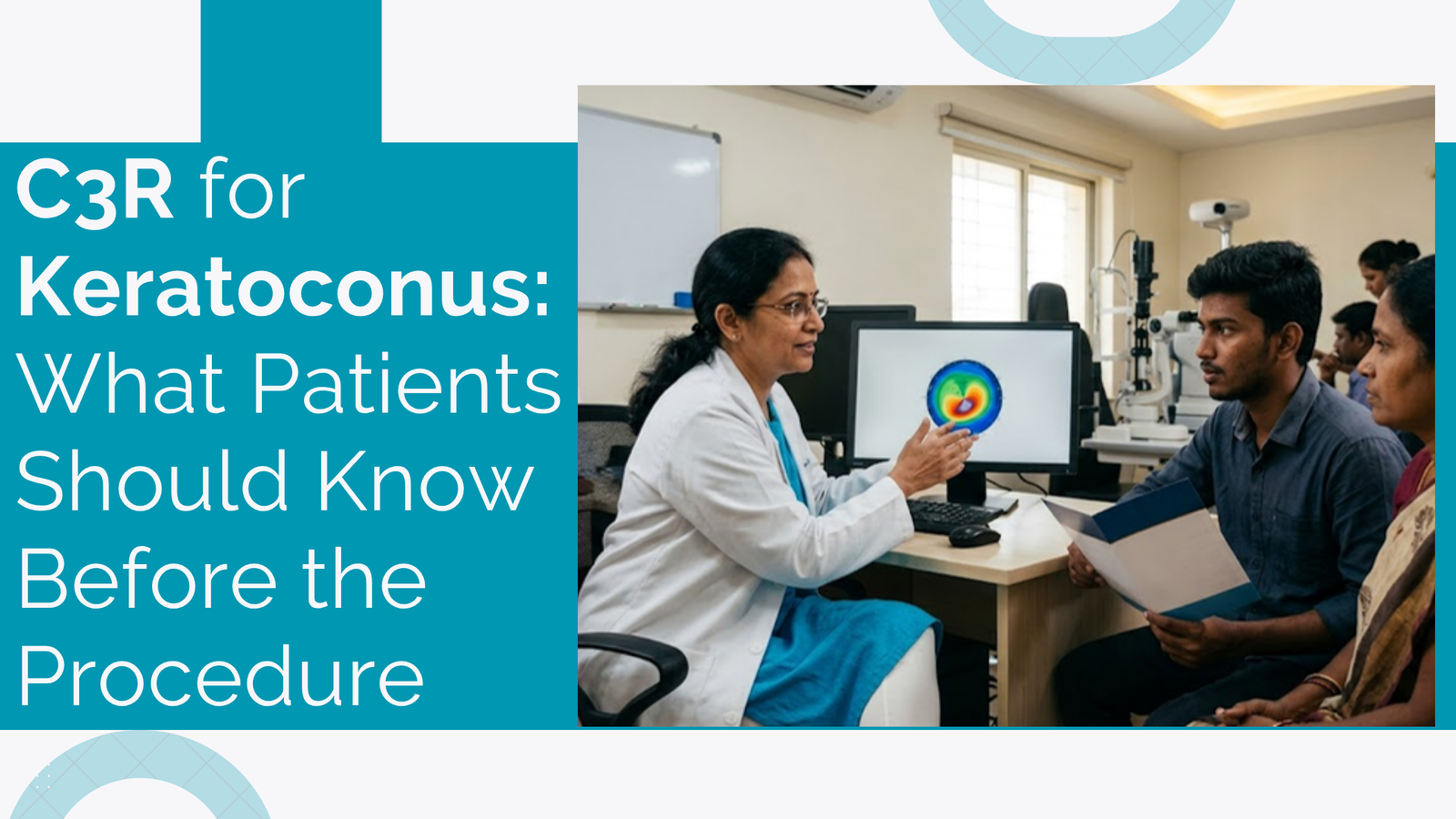
Corneal topography | Maps the shape and curvature of the cornea |
Corneal tomography | Provides detailed information about corneal structure |
Refraction test | Checks whether prescription changes are needed |
Eye examination | Evaluates overall eye health |
What Factors Decide Your Follow-Up Schedule?

Your eye specialist considers multiple factors before recommending how often you should return for checkups.
Important factors include:
Age
Younger patients may require more frequent visits because Keratoconus progression is often more active at younger ages.
Disease Stability
Patients with stable corneal measurements may need less frequent monitoring compared with those showing ongoing changes.
Previous Treatment
People who have undergone procedures such as corneal strengthening treatments may require specific follow-up schedules to monitor recovery and results.
Vision Changes
Sudden changes in vision, increased glare, difficulty seeing at night, or frequent prescription changes may indicate the need for an earlier appointment.
The Role of Advanced Testing in Keratoconus Monitoring
Modern eye care relies on advanced diagnostic technology to understand how Keratoconus affects the cornea. These tests provide detailed information that cannot always be detected through a standard eye examination.
Corneal mapping technologies help specialists evaluate:
- Corneal curvature changes
- Thickness variations
- Areas of weakening
- Disease progression patterns
These measurements allow doctors to create a more accurate treatment plan based on the patient’s specific condition.
Why Early Monitoring Can Protect Your Vision
Many patients delay eye checkups because they feel their vision has not changed significantly. However, Keratoconus progression can occur before noticeable symptoms appear.
Regular appointments provide an opportunity to identify changes early and discuss suitable options before the condition becomes more difficult to manage.
Early monitoring may help patients:
- Maintain better vision quality.
- Reduce future complications.
- Understand available treatment choices.
- Receive timely medical guidance.
A proactive approach is especially important because every patient experiences Keratoconus differently.
Meet an Experienced Keratoconus Eye Specialist
With more than three decades of experience, Dr. Vinay Agrawal (M.B.B.S., M.S. (Ophthalmology), D.N.B. (Ophthalmology), Cornea Fellow, L.V. Prasad Eye Institute) is recognized as one of Mumbai’s trusted ophthalmologists. His expertise includes corneal disorders, cataract procedures, and refractive surgeries, with a special focus on providing accurate diagnosis and evidence-based care for patients dealing with Keratoconus.
Patients seeking guidance from a Keratoconus Specialist in Mumbai can benefit from detailed evaluations, personalized treatment planning, and regular monitoring designed around their individual eye health needs.
What Happens If Keratoconus Is Not Monitored Regularly?
Ignoring follow-up appointments may allow unnoticed changes in the cornea to continue. Since Keratoconus affects the structure of the eye, delaying evaluation can make vision correction more challenging.
Possible concerns include:
Lack of Monitoring | Possible Impact |
Undetected progression | Increasing vision difficulties |
Delayed treatment decisions | Fewer management options at later stages |
Incorrect vision correction | Reduced comfort and clarity |
Missed warning signs | Higher risk of complications |
Regular checkups help patients stay informed about their eye condition and make timely decisions.
Lifestyle Habits That Support Keratoconus Care
Although follow-up care is essential, daily habits also contribute to protecting eye health.
Patients should:
- Avoid rubbing their eyes frequently.
- Manage allergies that cause itching.
- Follow prescribed lens care instructions.
- Protect eyes from unnecessary irritation.
- Attend scheduled examinations
Eye rubbing is especially important to avoid because repeated pressure on the cornea may contribute to worsening changes in some individuals.
When Should You Visit an Eye Specialist Immediately?
While routine follow-ups are essential, certain symptoms should not be ignored. Contacting an eye specialist early can help identify whether Keratoconus has changed or whether your current vision correction needs adjustment.
Seek professional advice if you experience:
Warning Sign | Why It Matters |
Sudden decrease in vision | May indicate changes in corneal shape |
Frequent prescription changes | Can suggest ongoing progression |
Increased glare or halos around lights | Often affects patients with irregular corneas |
Difficulty seeing clearly with existing lenses | May require updated vision correction |
Excessive eye rubbing due to irritation | Can place additional stress on the cornea |
Patients should remember that Keratoconus management is not only about treating symptoms but also about protecting the long-term health of the cornea.
Treatment Options Based on Keratoconus Progression

The treatment approach depends on how advanced the condition is, whether the cornea is becoming weaker, and how much vision is affected.
Common management options include:
Treatment Option | Purpose |
Prescription glasses | Suitable for mild vision changes |
Specialised contact lenses | Improve vision by creating a smoother optical surface |
Corneal cross-linking | Helps strengthen the cornea and slow progression |
Advanced surgical procedures | Considered for selected advanced cases |
The goal of treatment is not only to improve vision but also to prevent further deterioration whenever possible.
Patients exploring Keratoconus Treatment in India should focus on accurate diagnosis, experienced specialists, and a personalized approach rather than choosing treatment based only on cost or convenience.
How Follow-Up Care Supports Better Long-Term Vision
Living with Keratoconus requires ongoing attention because the condition can change over time. Regular visits allow patients and doctors to work together in maintaining the best possible vision.
A follow-up appointment is more than a routine eye check. It provides valuable information about whether current treatment is effective and whether any adjustments are needed.
Consistent monitoring can help patients:
- Feel more confident about their eye health.
- Understand their condition better.
- Make informed treatment decisions.
- Protect their vision for the future.
With advancements in corneal imaging and treatment techniques, many patients with Keratoconus can maintain good vision when they receive timely and appropriate care.
Choosing the Best Keratoconus Surgery Clinic in Mumbai for Keratoconus Management
Keratoconus requires specialized evaluation because every patient’s cornea responds differently. The experience of the treating ophthalmologist, availability of advanced diagnostic technology, and personalized follow-up planning all contribute to better outcomes.
A centre that focuses on comprehensive corneal care can help patients receive continuous support from diagnosis through long-term management.
For individuals searching for a Top Rated Keratoconus Specialist in Mumbai, choosing a doctor with extensive corneal experience and a patient-focused approach can make an important difference in the treatment journey.
Protect Your Vision With Expert Keratoconus Care

Regular eye checkups are one of the most important steps in managing Keratoconus and preserving clear vision. Early evaluation, accurate diagnosis, and timely treatment decisions can help prevent avoidable vision problems.
At Clear Vision Eye Centre, patients receive personalized guidance based on detailed eye examinations and modern diagnostic approaches. If you are looking for reliable Keratoconus Treatment in Mumbai, consulting an experienced eye specialist can help you understand your condition and choose the right care plan.
Do not wait for major vision changes before scheduling an evaluation. Regular monitoring can help protect your corneal health and support better visual outcomes for years to come.
Frequently Asked Questions About Keratoconus Follow-Up Care
1. How often should someone with Keratoconus have eye checkups?
Most Keratoconus patients need eye examinations every 6 to 12 months, but the exact schedule depends on age, disease progression, and previous treatments. Patients with faster changes may require more frequent monitoring to detect progression early and adjust their treatment plan.
2. Can Keratoconus stop progressing?
Yes, Keratoconus may remain stable in some patients, especially after appropriate treatment and monitoring. However, because progression patterns vary between individuals, regular follow-up appointments are important to confirm whether the condition remains stable over time.
3. What tests are performed during Keratoconus follow-up visits?
Follow-up visits commonly include vision testing, corneal topography, corneal tomography, and a detailed eye examination. These tests help doctors evaluate changes in corneal shape, thickness, and overall eye health.
4. What happens if Keratoconus is not monitored regularly?
Without regular monitoring, Keratoconus progression may go unnoticed. This can lead to increasing vision problems and may reduce available treatment options in advanced cases. Routine examinations help identify changes early and allow timely management.
5. Can Keratoconus affect daily activities?
Yes, Keratoconus can affect activities such as reading, driving, using digital devices, or seeing clearly at night. Proper diagnosis, vision correction, and treatment can help many patients manage these challenges effectively.
6. When should a Keratoconus patient consider surgery?
Surgery is considered when Keratoconus significantly affects vision or when other treatment options are no longer providing adequate results. The decision depends on corneal condition, disease progression, and individual patient needs.
7. Is Keratoconus treatment painful?
Most Keratoconus treatments are performed using techniques designed for patient comfort. The level of discomfort depends on the specific procedure, and doctors provide proper guidance for recovery and aftercare.
8. How can patients protect their eyes with Keratoconus?
Patients can support their eye health by avoiding frequent eye rubbing, managing allergies, following lens care instructions, and attending scheduled eye examinations. These habits help maintain better corneal health over time.