Diabetes and Your Eyes: Why an Annual Eye Exam Matters
You check your sugar, you take your tablets or insulin. When was your last eye exam? If you’re having to think about that you’re not the only one.
Here’s the hard truth. Diabetes can damage your eyes quite subtly over a number of years before you actually notice any change in your vision. By the time your vision starts to become blurred, some of the damage may already be irreversible. The good news is that you can virtually eliminate most of the diabetes-related vision loss if you catch it in the early stages.
That is exactly what a yearly diabetic eye check up does. It looks for small warning signs inside your eye long before they turn into big problems. In this guide, we explain in simple words how diabetes affects your eyes, what happens during the exam, how often you need it, and what you can do today to protect your sight.
Quick Answer: Why Do People with Diabetes Need a Yearly Eye Exam?
People with diabetes need a dilated eye exam every year because high blood sugar slowly damages the tiny blood vessels in the retina, often without pain or early symptoms. A yearly exam finds problems such as diabetic retinopathy, macular edema, cataract and glaucoma at an early stage, when treatment works best and vision can still be saved.
How Does Diabetes Affect Your Eyes?
Think of your eye like a camera. The front parts focus light, and the retina at the back works like the film that captures the picture. If you have ever wondered about the difference between the cornea and retina, here it is: the cornea is the clear front window that bends light in, while the retina is the thin, light-sensing layer at the back that sends images to your brain.
The retina is packed with tiny blood vessels. When blood sugar stays high for a long time, these vessels become weak. They can leak fluid or blood, or close off. The eye then grows new, fragile vessels that bleed easily.

Diabetes can affect almost every part of the eye. Here are the most common diabetes-related eye conditions:
| Diabetic Retinopathy | Retina | Tiny blood vessels weaken, leak or bleed | Usually none; later floaters, dark spots, blurry patches |
| Diabetic Macular Oedema (DME) | Macula (centre of the retina) | Fluid collects and causes swelling | Blurry or wavy central vision, trouble reading |
| Cataract | Lens | The clear lens becomes cloudy, often at a younger age | Hazy vision, glare from lights, faded colours |
| Glaucoma | Optic nerve | Pressure or poor blood flow damages the nerve | Usually none; slow loss of side vision |
Diabetic Retinopathy
This is the most common diabetic eye disease. In India, studies suggest that roughly one in eight people with diabetes already has some level of retinopathy. In the early stage, you feel completely fine.
Diabetic Macular Edema
The macula is the part of the retina you use for reading and recognizing faces. When fluid leaks into it, your central vision becomes blurry or wavy.
Cataract
People with diabetes tend to develop cataracts earlier. Good sugar control, sunglasses, quitting smoking and regular checks all help with cataract prevention. You can read more in our guide on preventing cataracts when you have diabetes.
Glaucoma
Diabetes roughly doubles the risk of open-angle glaucoma. Many patients ask us, “Is glaucoma hereditary?” Family history does raise your risk, and so does diabetes. When both are present, a yearly pressure and optic nerve check becomes even more important. Your doctor will also tell you what counts as normal eye pressure for glaucoma in your case. Learn more about our glaucoma management services.
Why “My Vision Is Fine” Is Not a Good Reason to Skip Your Exam
This is the biggest myth we hear. Most diabetic eye damage causes no pain, no redness and no blurring in the early stage. You can have 20/20 vision and still have bleeding spots in your retina.
Waiting for symptoms is like waiting for a car’s engine to smoke before you change the oil. Research by the US National Eye Institute shows that early detection, timely treatment and proper follow-up can lower the risk of severe vision loss from diabetic retinopathy by about 95%.
Warning Signs You Should Never Ignore
Please see an eye doctor quickly, even if your yearly exam is months away, if you notice:
- A sudden shower of floaters or dark spots
- Blurry or wavy vision that does not clear up
- Dark or empty areas in your field of view
- Trouble seeing at night
- Sudden loss of vision in one eye
What Happens During a Diabetic Eye Exam?
Many people feel nervous because they do not know what to expect. The exam is simple, safe and painless.

- Vision test: You read letters on a chart to check how clearly you see.
- Eye pressure test: A quick puff of air or a gentle touch measures the pressure inside your eye. This screens for glaucoma.
- Dilating eye drops: Drops widen your pupils. This takes 20 to 30 minutes.
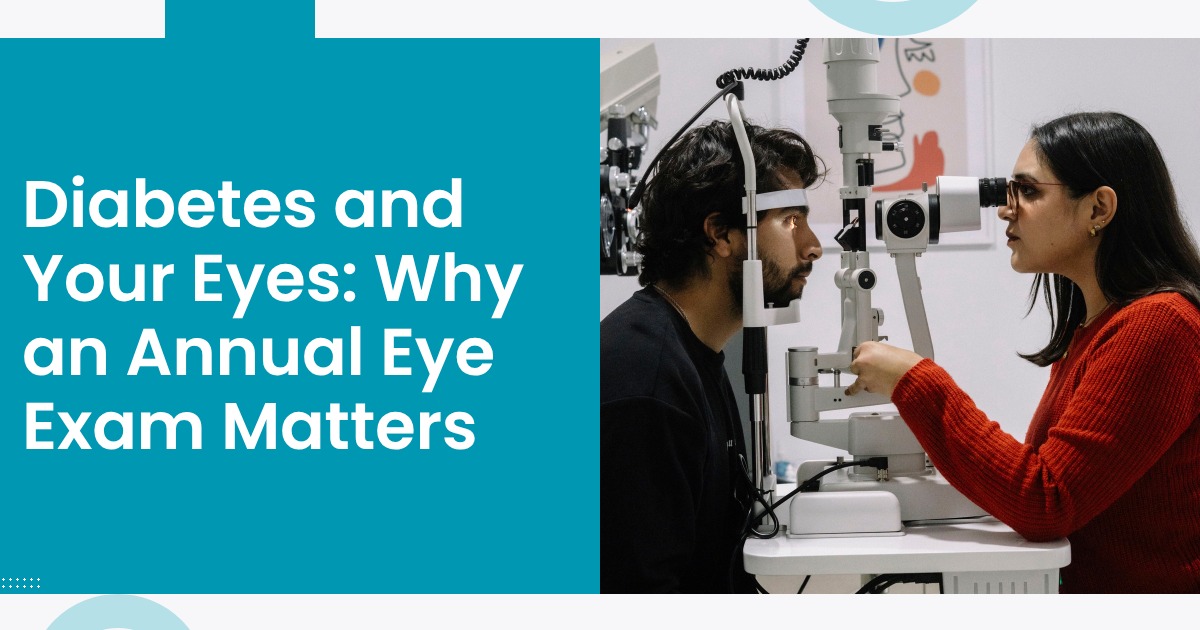
- Retina examination: The doctor uses a special lens and light to look at your retina, blood vessels and optic nerve.
- Scans if needed: An OCT scan or retinal photographs may be taken to check for swelling or early changes.
The visit takes 45 to 60 minutes. Vision stays blurry for a few hours after the drops, so bring sunglasses and someone to drive you home.
How Often Should You Get Your Eyes Checked?
The timing depends on your type of diabetes and what the doctor finds. Here is a simple guide based on international recommendations:
| Type 1 diabetes | Within 5 years of diagnosis | Every year |
| Type 2 diabetes | Right at the time of diagnosis | Every year |
| Pregnant with diabetes | Before pregnancy or in the first trimester | Every trimester and up to 1 year after delivery |
| Retinopathy already found | As advised by your doctor | Every 3 to 6 months or more often |
Type 2 diabetes often goes unnoticed for years, so some eye damage may already be present on the day you are diagnosed.
Can Diabetic Eye Damage Be Treated?
Yes, especially when it is found early. Treatment depends on the problem and its stage:
- Early retinopathy: Better control of sugar, blood pressure and cholesterol, with regular monitoring
- Macular edema: Injections into the eye (anti-VEGF medicines) to reduce swelling
- Advanced retinopathy: Laser treatment to seal leaking vessels, or surgery by a retina specialist if there is heavy bleeding
- Cataract: Safe, modern cataract surgery with a lens implant
- Glaucoma: Eye drops, laser or surgery to protect the optic nerve
If advanced bleeding or retinal detachment is found, you may be searching for a vitreoretinal surgeon near me. Your eye doctor will guide you to the right specialist.
Simple Daily Habits to Protect Your Eyes
Your daily habits matter too. Here are some preventive eye care tips for people with diabetes:
- Know your numbers: Aim for the HbA1c, blood pressure and cholesterol targets your doctor sets for you.
- Take medicines on time: Do not skip insulin or tablets, even on busy days.
- Move every day: A 30-minute walk helps control sugar and blood pressure.
- Quit smoking: Smoking damages blood vessels and speeds up eye disease.
Book Your Annual Diabetes Eye Exam Today
Do not wait for blurry vision to remind you. At Clear Vision Eye Centre, led by Dr. Vinay Agrawal, we offer complete diabetic eye exams with dilated retina checks, pressure testing and advanced scans under one roof. If you are looking for a trusted eye specialist in Santacruz or an experienced ophthalmologist in Mumbai, our team will explain your results in plain language.
📞 Call +91 83568 17556 or book your appointment online. Searching for an eye doctor near me in Santacruz West, Mumbai? We are just a call away.
Your eyes cannot tell you when they are in trouble, but a simple yearly exam can. Make your annual diabetic eye check up as routine as your sugar test, and give yourself the best chance of clear vision for life.
Frequently Asked Questions
1. How often should a diabetic have an eye exam?
Most people with diabetes should have a dilated eye exam once a year. If your doctor finds retinopathy, you may need checks every 3 to 6 months.
2. Can diabetes cause blindness?
Yes. If diabetic retinopathy or macular edema is left untreated, it can lead to serious and permanent vision loss. Early detection and treatment greatly lower this risk.
3. What are the early signs of diabetic retinopathy?
In most cases, there are no early signs at all. That is why yearly exams are so important. Later signs include floaters, blurry or patchy vision, dark spots and trouble seeing at night.
4. Is a diabetic eye exam painful?
No. The exam is painless. The dilating drops may sting for a few seconds, and your vision will be blurry and light-sensitive for a few hours afterwards.
5. Can diabetic retinopathy be reversed?
Damage that has already happened usually cannot be fully reversed. But treatment such as injections or lasers can stop it from getting worse, and in some cases swelling can reduce, and vision can improve.