The human eye is often described as a window to the world, and the cornea is the glass that makes that view possible. In a healthy eye, the cornea is a perfectly round, dome-shaped, clear surface that effectively focuses light. However, for those living with keratoconus, this “window” begins to fail in a very specific and often frustrating way. Keratoconus is a progressive eye disease where the normally round cornea thins and begins to bulge into a cone-like shape. This irregular curvature causes light rays to become out of focus as they enter the eye, leading to distorted vision, increased light sensitivity, and a significant drop in visual quality. Because the changes happen gradually, usually starting in the late teens or early twenties, many people dismiss the early signs as a simple need for a stronger glasses prescription. It is a condition that requires constant monitoring and specialized intervention to prevent long-term damage to the ocular structure. Understanding the nuances of this condition is the first step toward reclaiming your visual independence. For patients seeking a combination of clinical precision and a personalized approach to care, To ensure that the disease is managed effectively from the very first diagnosis, finding a facility that offers specialized Keratoconus treatment in Mumbai is essential.
The Silent Progression: Understanding the Causes
The exact cause of keratoconus remains a subject of intense medical research. However, it is generally believed to be a combination of genetic predisposition and environmental factors. Inside the cornea, tiny fibers of the protein collagen help hold it in place and prevent it from bulging. When these fibers weaken, they can no longer maintain their shape, and the cornea becomes more cone-shaped. This weakening is often linked to a decrease in protective antioxidants in the cornea.
Environmental triggers also play a significant role. Chronic eye rubbing is one of the most strongly linked behaviors to the progression of keratoconus. Repeated rubbing can cause physical trauma to the corneal fibers over time. Additionally, there is a known association between keratoconus and atopic diseases such as hay fever, asthma, and eczema, which often lead to itchy eyes and, subsequently, more eye rubbing. Genetics cannot be ignored either; roughly 1 in 10 people with keratoconus has a parent with the condition.
Recognizing the Warning Signs and Symptoms
In its earliest stages, keratoconus can be quite “insidious,” as the name suggests. The symptoms might include a slight blurring of vision or a sudden sensitivity to light. As the cornea becomes more irregular, patients often experience:
- Distorted Vision: Straight lines may look wavy or bent.
- Ghosting: Seeing multiple images of a single object (monocular polyopia).
- Frequent Prescription Changes: Needing new glasses every few months, with no stable outcome.
- Night Vision Issues: Glare and halos around lights make driving at night particularly difficult.
The Path to Diagnosis: Accuracy is Key
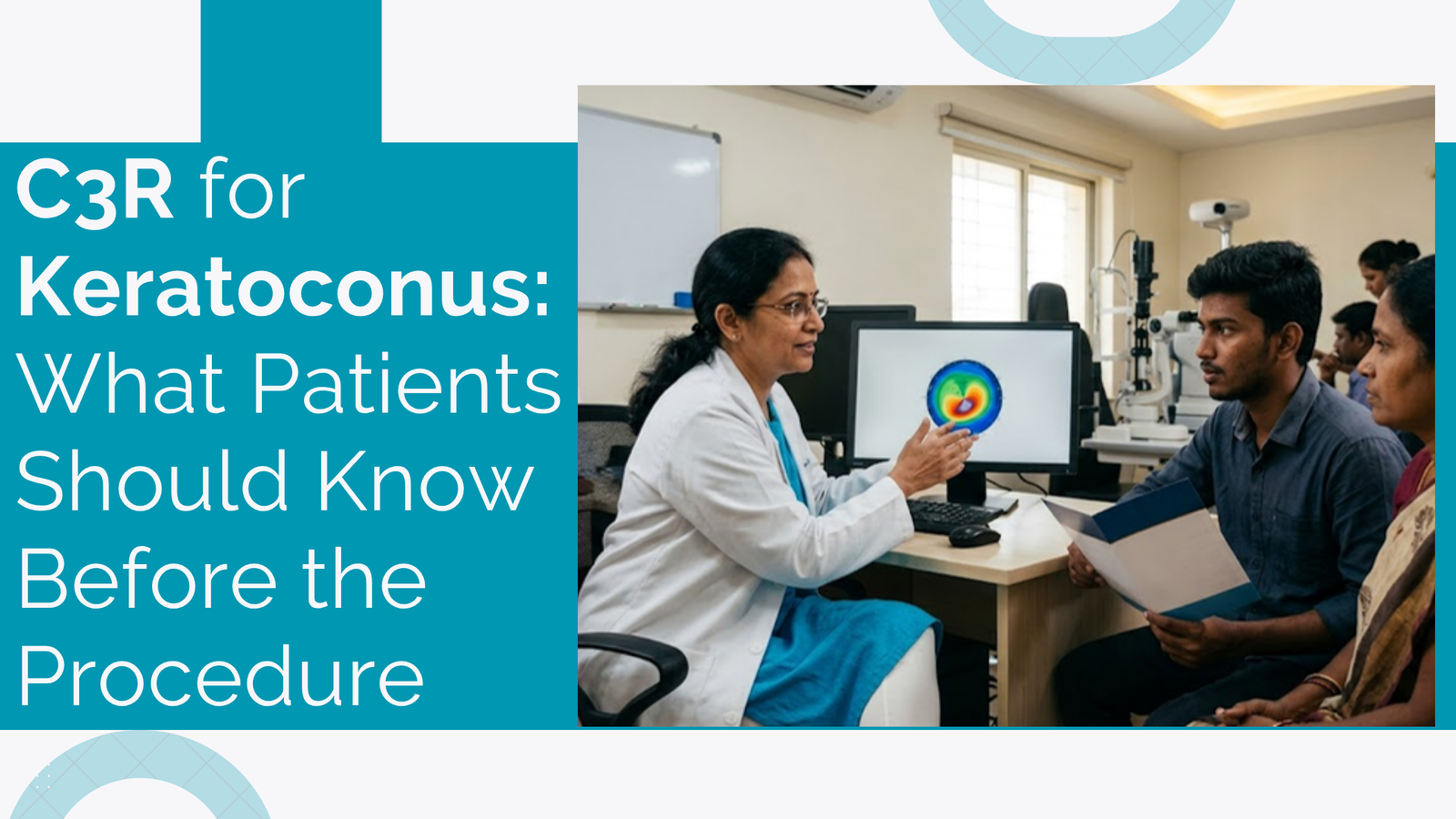
Because keratoconus often mimics standard refractive errors like astigmatism, a standard eye exam might miss the early signs of thinning. A Keratoconus specialist in Mumbai utilizes advanced diagnostic technology to map the eye. Tools like corneal topography create a three-dimensional “map” of the cornea’s surface, highlighting any irregularities in curvature or thickness. Early detection is critical because, while we cannot “reverse” the cone shape, we can stop it from worsening.
Exploring Advanced Treatment Options
The world of ophthalmology has seen incredible breakthroughs in how we manage this condition. Gone are the days when a corneal transplant was the only solution for advanced cases. Today, we focus on a tiered approach based on disease severity.
1. Specialized Contact Lenses
For mild to moderate keratoconus, glasses often fail to correct vision because they cannot compensate for the cornea’s irregular surface. Scleral lenses have become the gold standard in this area. These are large-diameter gas-permeable lenses that vault over the entire corneal surface and rest on the sclera (the white part of the eye). By creating a “liquid reservoir” between the lens and the eye, they provide a perfectly smooth surface for light to enter, often restoring vision to 20/20 levels.
2. Corneal Collagen Cross-Linking (C3R)
This is perhaps the most significant advancement in Keratoconus treatment in India over the last two decades. C3R is a minimally invasive procedure that uses riboflavin (Vitamin B2) drops and ultraviolet light to strengthen the chemical bonds within the corneal tissue. The goal is to “stiffen” the cornea and prevent it from bulging further. It is a preventative procedure that has saved thousands of patients from eventually needing a transplant. Read our detailed guide to corneal collagen cross-linking.
3. Intracorneal Ring Segments (INTACS)
For patients who cannot tolerate contact lenses, small crescent-shaped implants called INTACS can be surgically placed within the peripheral layers of the cornea. These inserts act as “braces” that flatten the cone, making the surface more regular and improving the patient’s ability to wear glasses or lenses comfortably.
Trusting a Legacy of Ophthalmic Care
When dealing with a condition as complex as keratoconus, your consultant’s experience is paramount. Dr. Vinay Agrawal is one of the most highly commended ophthalmologists in Mumbai, with a career spanning over 30 years. His academic background is extensive, including an M.B.B.S., an M.S. (Ophthalmology), and a D.N.B. (Ophthalmology), followed by a prestigious Cornea Fellowship at the L.V. Prasad Eye Institute. Throughout his three decades of active practice, he has developed a deep expertise in managing corneal diseases, refractive errors, and cataract surgeries, ensuring that his patients benefit from both seasoned wisdom and modern techniques.
At Clear Vision Eye Centre, the focus is on providing a comprehensive care pathway. We understand that keratoconus is a lifelong journey, and our patients require more than just a one-time procedure. We pride ourselves on being one of the leading eye hospitals & clinics for keratoconus, offering a dedicated department for corneal health where patients receive customized treatment plans designed around their specific visual requirements and lifestyle.
Innovation and Global Standards
Patients no longer need to look abroad for advanced keratoconus treatments. By adhering to global protocols and using the latest surgical platforms, we ensure that our diagnostic and therapeutic services meet international standards. From initial corneal topography to advanced surgical interventions such as Deep Anterior Lamellar Keratoplasty (DALK) for severe cases, we provide a full spectrum of care under one roof.
Prevention: What Can You Do?
While you cannot change your genetics, you can influence the progression of the disease. The single most important preventative measure is to stop rubbing your eyes. Here is why you should avoid rubbing your eyes even when they itch. If allergies are making your eyes itchy, consult a specialist for anti-allergy drops rather than resorting to physical rubbing. Regular check-ups are also vital; if you have a family history of keratoconus, ensure that your children have their corneal topography checked starting in their early teens.
A Clearer Future Awaits
Living with keratoconus can feel like a constant struggle for clarity, but it is a manageable condition. With the right combination of early diagnosis, specialized lens fitting, and modern strengthening procedures, most patients can maintain excellent vision throughout their lives. The evolution of medical science has turned a once-debilitating disease into a manageable hurdle. By choosing a partner who understands the intricacies of corneal architecture, you are protecting your sight for the long term. For those seeking expert guidance and world-class surgical outcomes, our center remains the premier choice for Keratoconus treatment in Mumbai.
Schedule Your Consultation Today
Your vision is too precious to leave to chance. If you are experiencing frequent changes in your prescription or distorted vision, take the first step toward a clearer future.
- Expert Consultation: Meet with Dr. Vinay Agrawal for a detailed corneal assessment.
- State-of-the-Art Diagnostics: Experience the precision of our Clear Vision Eye Centre imaging systems.
- Personalized Care: We offer a range of solutions from specialized scleral lenses to advanced surgical interventions.
- Contact: Call +91-8356817556 to book your appointment at our Santacruz West facility.
Frequently Asked Questions (FAQs)
1. Is keratoconus a form of eye cancer?
No, keratoconus is a non-inflammatory, degenerative condition. It is not a tumor or cancer, and it does not spread to other parts of the body.
2. Can LASIK surgery cure keratoconus?
Actually, LASIK is generally avoided for patients with keratoconus. Because LASIK further thins the cornea, it can significantly worsen the bulging and instability associated with the disease.
3. Does C3R surgery improve my vision?
The primary goal of C3R is to stabilize the eye and stop the disease from progressing. While some patients notice a slight improvement in clarity, the procedure is designed to prevent vision from worsening rather than serving as a corrective surgery.
4. How long is the recovery after Intacs surgery?
Most patients can return to work within a few days. However, your vision may fluctuate for several weeks as the eye adjusts to the new corneal shape.